Helm Wiring
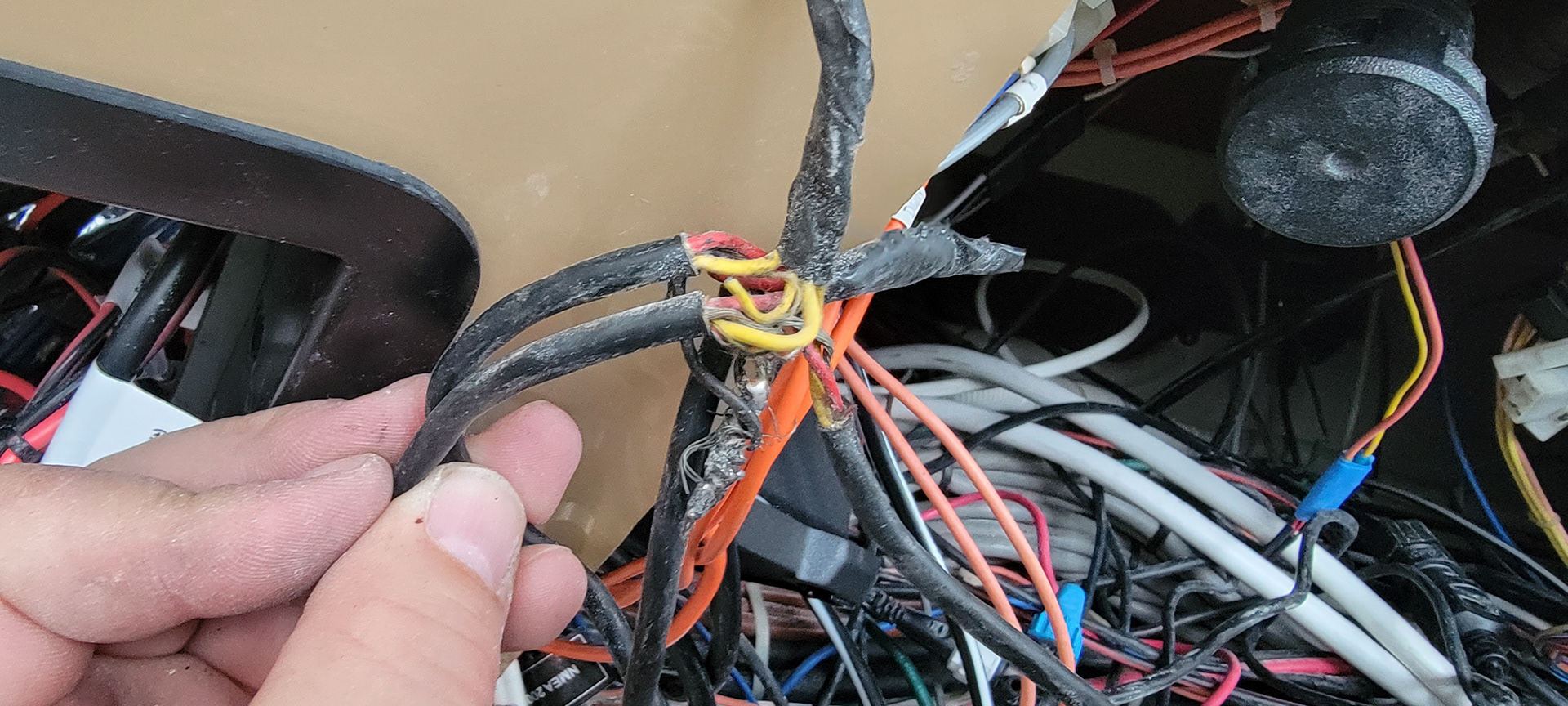 We had planned for the electronics package to be upgraded from the start. Our hope was to use some of the wiring already in place for the electronics at the helm, but once the project was started, it was obvious we had a much bigger mess on our hands.
Opening the helm access panel for the first time was a bit of shock and disappointment for us. Many of the electronics were wired in an alarming manner. Live wires were dangling, butt connectors were replaced with a few twist of the wire and electrical tape. Attempts to solder wires together were laughable at best.
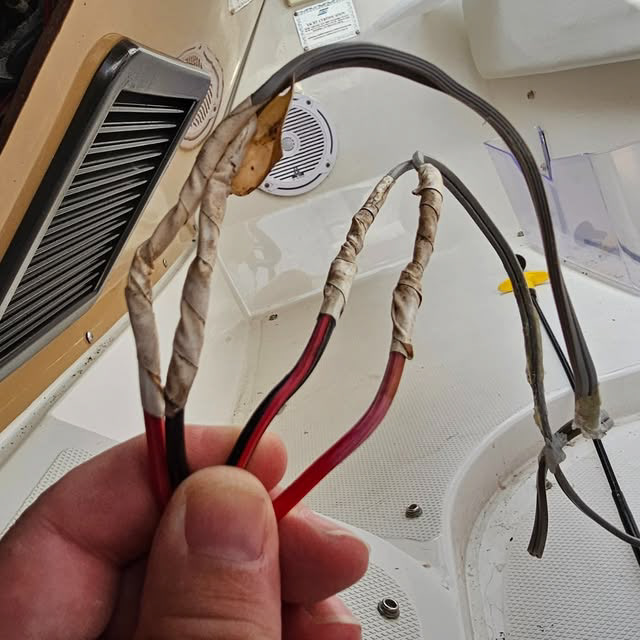 In addition to wiring connection issues, there was also poor wiring decisions that created additional problem. A few devices that needed specific gauge wire were cobbled together using whatever was on hand at the time and taped together. Unfortunately, digging through the paperwork we did get with the purchase of the vessel, this particular installation was handled by an actual electrician changing air horns to electric horns. You should not reduce the gauge of the wire as you go by twisting and taping different gauge wire together or using outdoor speaker wire as part of the power supply.
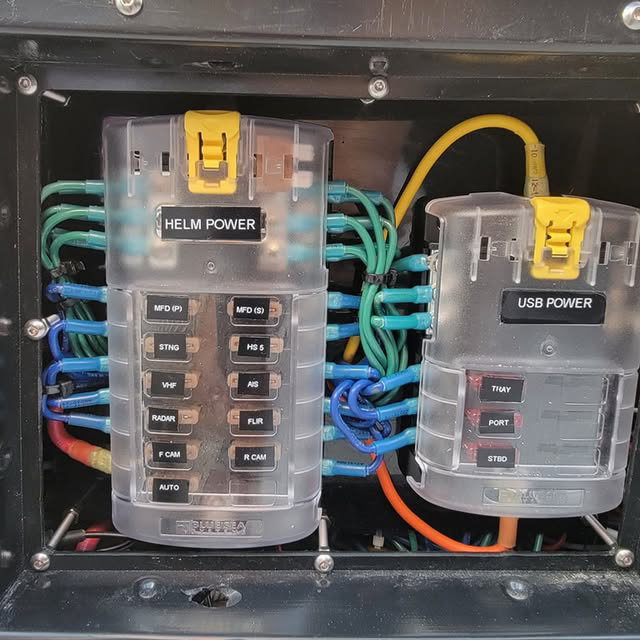
We traced all the power supply wires back to the breaker panel to make sure all the wires were accounted for. After laying out what was needed to power our new electronics package, we got to work. The main power to the helm was supplied by a single 2/0 cable from the breaker panel on a 30 amp breaker. This feeds a block distributor at the helm. This was connected to a series of old push reset fuses. The 2/0 was replaced with new cable, and the push reset fuses were removed. A 6awg wire was run 2ft from the distribution block to new fuse blocks. This will allow up to a 70a draw to the fuse block. The USB chargers were put on a separate fuse block with an 8awg wire allowing up to a 40a draw. The blocks were fused with recommended fuse sizes and each fuse block is drawing 10% below the rating of the wire supplying power to the block.
The best location for the new fuse boxes were inside the return air vent for the helm air conditioner. Using a left over piece of starboard from another project and six inch stainless 4mm bolts, we created a stand off platform that would allow the blocks to be hidden behind the air grate cover, but be accessible enough to replace fuses quickly should there be an issue. All the wiring behind the helm access panel was grouped together and zip tied to keep things as neat as possible, including using printable shrink tubing to identify what the wires are powering.